
Adult children of emotionally immature parents are people who grew up managing a parent’s moods, filling emotional gaps a parent could not fill themselves. The label does not diagnose any parent. It names a pattern: a child who learned to read a room before learning to read a book. In family pattern astrology, this pattern often traces to the Moon’s sign, Saturn’s house, and the fourth house of home and family in the birth chart.
As of October 6, 2026, this pattern is one many adults are naming for the first time, often while reading about their own family history. A birth chart reading can offer language for roles that were never spoken aloud at home, but it does not replace a parent’s responsibility or a child’s own healing path.
Who are adult children of emotionally immature parents?
An adult child of emotionally immature parents usually learned to manage a caregiver’s feelings before learning to name their own. The parent may have struggled with steady emotional support, with repair after conflict, or with treating a child’s feelings as real and important. The result is often a child who grows into an adult still playing an old, unassigned role.
Common roles include the fixer, the peacekeeper, the quiet achiever, and the invisible one. These roles usually formed for a reason, as a way to keep peace or stay safe in an unpredictable home. Naming the role does not mean blaming the child who built it, or shaming the parent who needed it.
How do inherited roles show up in the birth chart?
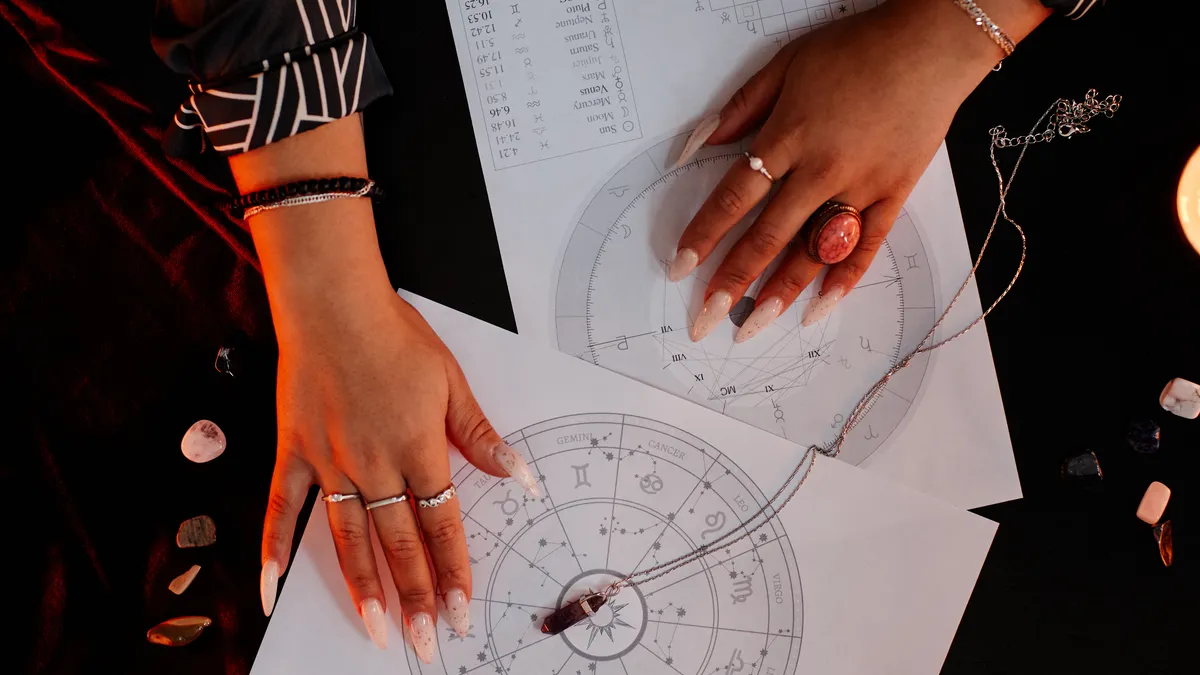
A birth chart, sometimes called a natal chart, is a map of where each planet and sign sat at the exact time and place of someone’s birth. The chart is divided into twelve houses, each tied to a life area; the fourth house governs home, family, and one’s sense of belonging. A crowded or tense fourth house often describes a demanding early home life, not a fixed outcome.
The Moon, the planet linked to emotional needs and nurturing, shows the emotional language a person learned first. A Moon in a fixed sign, like Taurus or Scorpio, can describe someone who learned to hold feelings privately rather than voice them. Saturn, tied to duty and structure, often marks where a child carried adult-sized responsibility too early.
None of these placements assign fault. They describe a shape, the way a river carves around rock, formed by conditions a child did not choose. For a closer look at maternal patterns specifically, see this site’s guide to mother-line family patterns.

Why do these patterns resurface in adulthood?
Family roles formed in childhood rarely stay quiet forever. Certain planetary cycles tend to bring them back into view, prompting a second look at habits formed decades earlier.
A Saturn return happens when Saturn, which takes about 29.5 years to orbit the sun, returns to the degree it held at someone’s birth. The first Saturn return usually falls between ages 27 and 30, a stretch when many adults question the structures, including family roles, built around them.
Saturn also forms a square, a 90-degree angle linked to friction and growth, to its own natal position at predictable ages: around 7, 14, 21, 36, 43, and 50. When Saturn squares your natal Saturn, which happens around age 36, old caretaking patterns can resurface loudly, asking whether they still fit. This is less a punishment and more a scheduled check on a structure built long ago.
When might 2027 transits bring these patterns forward?
A transit is the current position of a planet compared with its place in someone’s birth chart, used to describe themes active in a given period. The table below lists five 2027 transits tied to home, worth, and self-expression, drawn from verified planetary ingress dates (see astro.com for full ephemeris tables).
| Date | Transit | Possible family-pattern theme |
|---|---|---|
| January 8, 2027 | Venus enters Sagittarius | Questioning inherited beliefs about love and duty |
| February 4, 2027 | Venus enters Capricorn | Re-examining self-worth tied to caretaking or responsibility |
| February 22, 2027 | Mars enters Leo | More visible self-expression, useful for stepping out of a quiet role |
| July 4, 2027 | Venus enters Cancer | Home and nurturing themes surface, tied to the fourth house |
| July 27, 2027 | Jupiter enters Virgo | Growth in daily routines and health boundaries, sixth house themes |
These five windows describe planetary movement only. A transit is a backdrop for reflection, not a script for what will happen in any specific family.
One practical way to use the table is as a journaling calendar. Around July 4, 2027, when Venus enters Cancer, a person might write about what comfort looked like at home growing up, and who provided it. Around February 22, 2027, when Mars enters Leo, the question might shift to where it still feels risky to take up space.
What can help when an old family role still runs the day?
Naming a role out loud is often the first real shift. Saying “I am the fixer” or “I am the quiet one” can loosen its grip, even before anything else changes.
Astrology describes themes; it does not treat them. Working with a qualified therapist is often the clearer path when childhood patterns affect daily relationships or mental health, and chart work can sit alongside that support rather than replace it.
Small boundary experiments help too. Turning down one small caretaking task, then sitting with the discomfort instead of fixing it right away, can show how deep an old role runs.
Here is a concrete example. Someone raised as the family peacekeeper might notice an urge to smooth over every tense phone call with a parent. Letting one awkward silence stand, without rushing to fill it, is a small experiment that reveals how much of the old role is still on autopilot.
Should you confront, limit contact, or step back from a parent?
There is no single correct answer here, and no chart can decide it for anyone. A strong Saturn-Moon link might describe a lifelong caretaking pattern without telling a person what to do about one specific relationship today.
Some adult children find that clear, limited contact works well. Others need more distance for a season, or longer. A family pattern astrology perspective can offer a mirror for weighing these choices, but the decision belongs to the person living inside the relationship, guided by their own safety, values, and support.
A simple framework can help sort the options. First, ask whether you feel physically and emotionally safe during contact. Second, ask what you hope a conversation would change, and whether that change depends on the parent responding differently.
Third, notice how you feel in the days after a visit or call. If you feel steady, current contact may be workable. If you feel drained for a long stretch, that is useful information, worth bringing to a trusted friend or therapist.
Patterns formed in childhood are real, and so is the ability to see them clearly now. Seeing a role is not the same as being stuck in it forever.
Ruth offers chart readings by email for anyone who wants a closer look at these placements in their own birth chart.