
As of October 8, 2026, searches for “narcissistic father” are rising, and most people typing it want to understand a pattern, not a diagnosis. In astrology, this difficult father figure is often described through a harsh Saturn or Sun placement, a tense 4th house, or strained synastry between his chart and yours. These signatures do not prove narcissism. They show a relational style worth examining with care.
Astrology cannot diagnose narcissistic personality disorder. That is a clinical term for mental health professionals. What a chart can do is describe recurring dynamics, like control, coldness, or competition, that many people associate with a demanding father figure.
What Is a Narcissistic Father, Astrologically Speaking?
In traditional astrology, the father is linked to Saturn and the Sun, while the 4th house describes the family home and early emotional foundation. A narcissistic father pattern often shows up as a hard Saturn-Sun aspect in the child’s chart, or Saturn placed in the 4th or 10th house with difficult angles.
This does not mean every person with Saturn in the 4th house had a cold or controlling father. It means the chart often mirrors a theme the family lived out. Narcissistic parents in astrology covers this placement pattern in more depth, including how it can show up differently for mothers and fathers.
Ruth Alder, who writes the family pattern readings at The Family I Was Given, looks at these placements as roles passed through generations rather than fixed verdicts. A father who dominates a household may be repeating a script his own father used. That does not excuse harm, but it often explains its shape.
How Does the Father Wound Form in the Birth Chart?
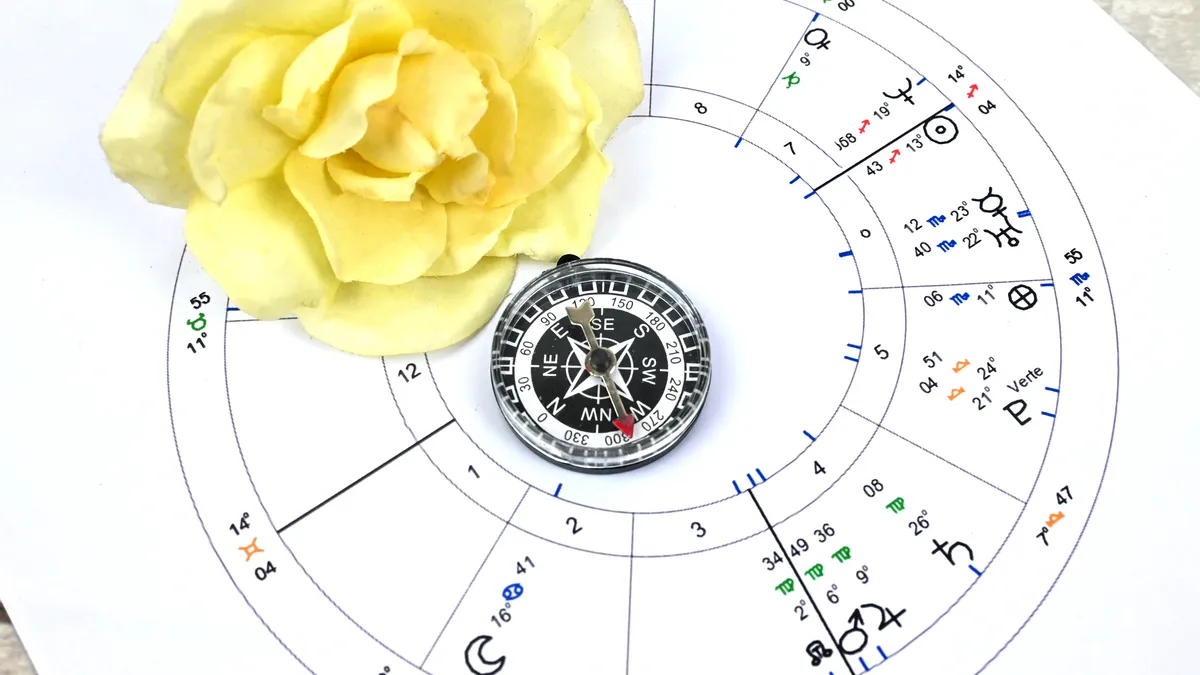
The father wound describes a lasting ache from feeling unseen, unprotected, or controlled by a father figure. In astrology, it is often traced through Saturn’s aspects to the Sun, Moon, or Venus, and through planets placed in the 4th or 10th house.
Synastry, the comparison of two people’s birth charts to study a relationship, can show why a father-child bond felt especially charged. A Saturn-Moon contact between a father’s chart and his child’s, for example, can describe emotional distance even when both people wanted closeness. The ache is real even when the astrology is just description, not proof.
Many adults carry this wound into adult relationships, work, and self-worth. A hard Saturn transit, a period when Saturn’s current position forms a tense angle to a natal planet, can reactivate old father material even decades later. This is one reason the pattern feels so persistent.
Why Father-Daughter and Father-Son Relationships Differ
A father-daughter relationship and a father-son relationship often carry different pressures, even from the same man. Venus, which governs desire, worth, and values, often describes how a daughter learned to relate to men through watching her father. Mars, which governs assertion and drive, often describes how a son learned to compete or align with his father’s authority.
A controlling father may demand compliance from a daughter while demanding dominance from a son. The chart reflects this through different aspects: Venus square Saturn for a daughter learning to shrink, Mars square Saturn for a son learning to fight for space. Neither pattern is better or worse. Both describe survival strategies formed early.
Why does my mother hate me explores a parallel dynamic on the maternal side, since households rarely carry only one difficult parent. Many charts show both parents contributing distinct pressures.
What Happens When the Father Is Absent?
An absent father, whether through death, divorce, distance, or emotional unavailability, leaves its own chart signature. Saturn or the Sun in difficult aspect, or an empty or afflicted 4th house, often describes this gap rather than active conflict.
Absence can be as formative as presence. A child may build an idealized version of the missing father, or may build deep self-reliance earlier than most peers. Both are common responses, and neither is a flaw.
Family karma, a term used here to describe repeating household patterns across generations rather than punishment, often explains why absence echoes forward. Family karma and repeating patterns traces how one generation’s absence can shape the next generation’s parenting choices, sometimes without anyone noticing the link.
When Do These Patterns Shift Astrologically?
Saturn returns to its natal position roughly every 29.5 years, an event called the Saturn return, and it often brings father material back to the surface for review. Saturn square natal Saturn, a tenser angle, recurs around specific ages and tends to pressure family roles into change.
| Age | Astrological event | Common theme |
|---|---|---|
| 7 | First Saturn square natal Saturn | Early awareness of family rules |
| 14 | Second Saturn square natal Saturn | Testing authority, including the father's |
| 21 | Third Saturn square natal Saturn | First attempts at independence |
| 27 to 30 | Saturn return | Reassessing the father's influence on adult identity |
| 36 | Saturn square natal Saturn | Reckoning with inherited parenting patterns |
| 43 | Saturn square natal Saturn | Reviewing career and authority, often tied to father themes |
| 50 | Saturn square natal Saturn, Chiron return | Deeper grief work around the father wound |
Exact dates for any individual depend on their natal chart, which you can check against an ephemeris such as astro.com. These ages are general markers, not guarantees of change. Some people notice the shift later or sooner, depending on other chart factors.
Ruth often points to the 36 and 43 markers in her written readings. “When Saturn squares your natal Saturn, around age 36, old material resurfaces,” she notes. This does not mean the relationship will heal on schedule. It means the internal work often becomes more available then.
Should You Reach Out or Stay Away?
Astrology cannot tell you whether to contact a difficult father figure or stay apart. That decision involves safety, history, and personal values that a chart does not weigh in.
What a reading can offer is context. Seeing the Saturn placement, the synastry aspect, or the 4th house pattern can help someone understand why a relationship felt the way it did, without assigning blame to either side. Estranged from parents looks at the astrology around cutting contact, including what tends to ease or complicate that choice.
If you are weighing contact, consider what support you have outside astrology too. A pattern reading works best alongside, not instead of, practical care like counseling or trusted friends. The mother and family section holds other pieces on related dynamics, including sibling roles and inherited household patterns.
Ruth Alder’s approach, described more on her about page, treats these charts as maps of roles rather than scorecards. A difficult father placement describes a pattern a family carried. It does not excuse harm, and it does not obligate forgiveness either.
Ruth offers written astrology readings by email for anyone who wants a closer look at their own father pattern.