
As of November 8, 2026, a narcissistic father is a parent who consistently centers his own needs, image, and control above his children’s emotional growth, often through criticism, conditional love, or subtle manipulation. This is a descriptive pattern, not a clinical diagnosis. In astrology, we look at the Sun, Mars, and Saturn placements in a father’s or child’s chart to understand how authority and self-focus showed up at home.
This isn’t about labeling anyone. It’s about naming a pattern clearly enough that you can stop blaming yourself for it. At The Family I Was Given, that’s the whole project: using the chart to describe roles, not to hand out verdicts.
What is a narcissistic father?
A narcissistic father is a parent whose sense of self depends heavily on control, admiration, or being seen as right. He may be charming in public and cold or demanding at home. The common thread isn’t one bad day, it’s a repeated pattern where his comfort comes first.
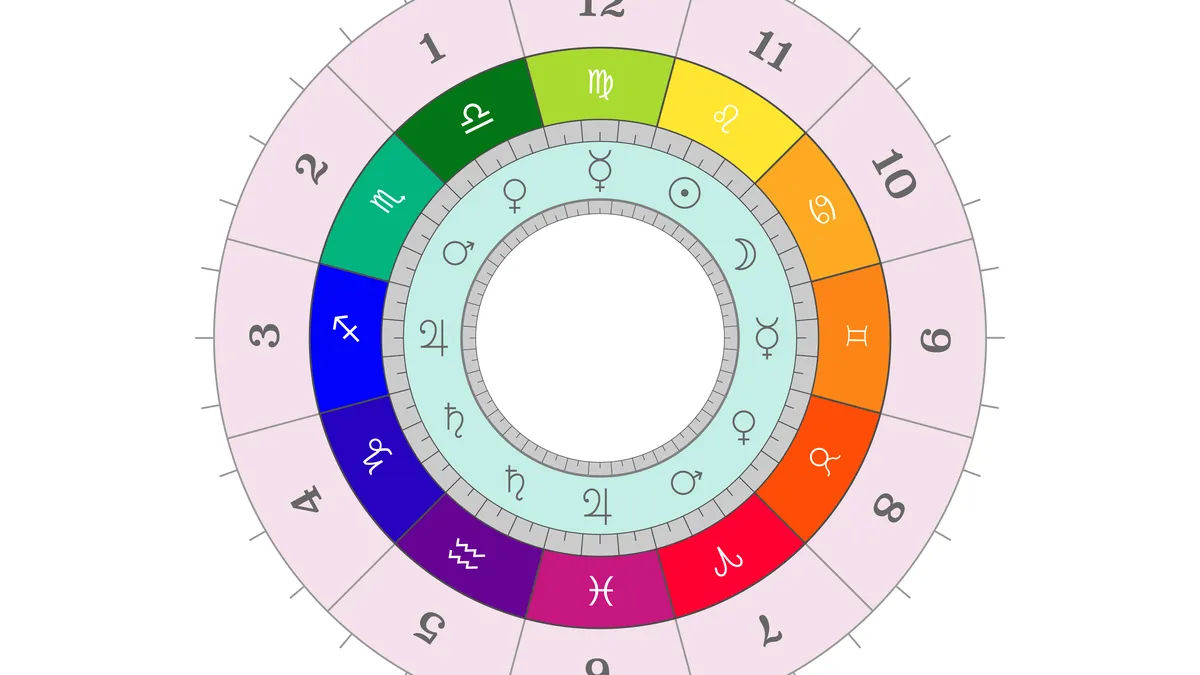
In chart terms, the Sun describes identity and ego, the part of us that wants to be recognized. The 10th house describes career and public role, and in family astrology it also shows how a father wanted to be seen by the world. When a father’s Sun or 10th house placements are under heavy pressure from Saturn, the planet of structure, duty, and limits, that need for recognition can turn into control at home. This doesn’t cause narcissism on its own. It’s one lens among many for understanding why a particular father leaned so hard on image and authority.
What does a narcissistic father act like?
Day to day, a narcissistic father often swings between praise and punishment depending on whether a child is making him look good. He may dismiss a child’s feelings, take credit for their achievements, or treat disagreement as betrayal.
Some common behaviors include constant comparison with siblings or peers, difficulty apologizing, and using guilt to keep children compliant. Mars, the planet of assertion and conflict, often shows up strongly placed in these charts, pointing to a father who equates winning arguments with being loved. None of this means every strong Mars placement predicts narcissism, it simply describes one recurring pattern we see in family charts.
If this sounds familiar, the piece on toxic family patterns in astrology goes further into how repeated behaviors become generational scripts.
| Behavior Pattern | Often Linked Chart Placement | What It May Mean |
|---|---|---|
| Needs constant admiration | Sun in a fixed sign (Leo, Taurus, Scorpio, Aquarius) | Identity tied tightly to being admired or proven right |
| Harsh criticism, conditional love | Saturn square natal Sun | Love expressed through control, discipline used as a stand-in for warmth |
| Competitive with his own children | Mars in the 1st or 5th house | Assertion and self-expression compete with the child's own |
| Public charm, private coldness | Strong 10th house, weak 4th house | Public role is prioritized over home life and emotional presence |
| Guilt-based control | Moon square or opposite Saturn | Emotional needs are managed through obligation rather than comfort |
What is narcissistic mother like, and how is it different?
A narcissistic mother often centers control through emotional closeness rather than distance, using guilt, comparison, or subtle withdrawal of affection, a pattern explored in what a narcissistic mother looks like. A narcissistic father more often centers control through authority, performance, or conditional approval. Both patterns can coexist in one household.
If your experience points more toward a mother’s role, the guide on emotionally unavailable mothers in astrology covers that pattern in more detail. The planets differ in emphasis, but the underlying dynamic, a parent’s need outweighing a child’s, is similar.
How does a narcissistic father affect his son or daughter?
The effects of growing up with a narcissistic father often show up differently depending on the child’s own chart and role in the family. Sons may absorb a template for how men use authority, sometimes mirroring it, sometimes rejecting it entirely. Daughters may internalize a belief that love must be earned through performance or appeasement.
For daughters specifically, the Sun-Saturn relationship in synastry, the comparison between two charts, often describes how approval felt conditional growing up. The piece on father daughter relationships in astrology explains this dynamic through Saturn and the Sun in more depth. For sons, Mars and Saturn together often shape how conflict and competition got learned at home, a theme explored in father son relationships in astrology.
What is it like growing up with a narcissistic father?
Growing up with a narcissistic father often means learning to read moods before learning to trust your own feelings. Children in this pattern frequently become highly attuned to other people’s needs, sometimes at the cost of their own.
As adults, many notice they still brace for criticism even in safe relationships, or they overachieve to preempt disapproval. Saturn transits, periods when the planet of limits and maturity moves across sensitive points in the chart, often bring this pattern into sharper focus. When Saturn squares your natal Saturn, which happens around age 21 to 22 and again around 36 to 37, old family dynamics tend to resurface for review, not repetition.
What is the best way to deal with a narcissistic father?
There is no single correct response, because every family configuration and every chart is different. What tends to help is clarity about the pattern itself, separate from guilt about having needs.
Setting limits around contact, conversation topics, or how much emotional labor you offer is one practical step many people find grounding. The guide on setting boundaries with family walks through specific language and timing for that work. Astrology won’t tell you what to decide, but the chart can describe why certain conversations with your father feel unusually charged, often tracing back to Mars or Saturn contacts between your two charts.
How to protect a child from a narcissistic father?
Protecting a child in this situation usually means building consistency somewhere else, whether through another caregiver, a trusted adult, or routines the child can count on. The 4th house in astrology describes home and family, the emotional foundation a child is building. Even one steady relationship can offset a parent’s instability over time.
This is not a legal or clinical question, and specific safety concerns deserve professional and legal guidance beyond what a chart can offer. What astrology can describe is the emotional climate a child absorbed and how that climate might still be shaping adult relationships now. The ingress of Mars into Virgo on November 25, 2026, a period often associated with more careful, detail-oriented assertion, can be a useful marker for practicing calmer boundary-setting conversations. You can check exact planetary positions and dates through astro.com.
How do you know if this is really narcissism or just a difficult parent?
Not every strict or critical father fits this pattern, and not every disagreement means narcissism. The distinguishing feature is consistency: does approval depend almost entirely on how well a child reflects well on the father, across years, not just occasional friction.
If you’re unsure whether what you experienced fits this pattern or another family dynamic entirely, the piece on why your family may feel distant or hostile offers a broader map of family roles worth ruling in or out first.
What causes a narcissistic father, and does the chart explain it?
Astrology doesn’t claim to explain the origin of narcissism, which involves psychology, upbringing, and circumstance far beyond any single chart reading. What a chart can describe is how a father’s own unresolved patterns, often inherited from his own Saturn or Sun placements, got passed down structurally. This is pattern recognition, not causation, and it’s offered here as Ruth Alder approaches all family charts: with curiosity about roles before judgment about blame.
Understanding a father’s own Saturn return, the period around ages 27 to 30 when Saturn comes back to its birth position and often intensifies questions of identity and authority, can sometimes add context. A father moving through his own Saturn return while raising young children may have brought unusual pressure into the household. None of this excuses harmful behavior, it simply adds texture to where the pattern may have started.
For a fuller map of these generational threads, the section hub on family and mother patterns collects related guides on absent fathers, emotionally distant parents, and the chart signatures that tend to repeat across generations.
A Family Chart Reading can map these specific placements against your own birth details for a more personal look.
what is a narcissistic father behavior?
Narcissistic father behavior usually means a repeated pattern of putting his own image, control, or approval needs ahead of his child’s feelings, not just one harsh moment. Common signs include swinging between praise and punishment, taking credit for a child’s wins, and treating disagreement as disloyalty. Charts with a strong Mars or a Saturn-Sun square often describe fathers who tie love to winning or being right, though that is only a tendency, not a guarantee.
how does a narcissistic father behave?
He tends to behave in ways that keep attention and control centered on himself, shifting between charm in public and coldness or criticism at home. Day to day this can look like comparing siblings, struggling to apologize, or using guilt to keep a child compliant. In chart terms, a strongly placed Mars often points to someone who treats conflict as a contest, while heavy Saturn pressure on the Sun can show up as love that feels conditional on performance.